Occasional slow pop-up for S6520X-54QC-EI portal at a certain site
- 0 Followed
- 0Collected ,1623Browsed

Problem Description
The redirect is slow when enabling authentication.
Process Analysis
1. If on-site information can be collected, provide feedback on device diagnosis and related debug returns (For the terminal IP address in Acl, only the source and destination need to be written.)
debugging portal packet acl 3001
debugging http-redirect all acl 3001
acl ad 3001
rule 0 permit ip source x.x.x.x 0
rule 5 permit ip destination x.x.x.x 0
2. There are numerous log errors in the diagnosis:
%Apr 14 21:46:50:627 2025 hx RESMON/2/RESMON_USEDUP: -Slot=2; -Resource=pbr-Total=0-Used=0-Free=0; Resources used up.
%Apr 14 21:46:50:640 2025 hx RESMON/2/RESMON_USEDUP: -Slot=2; -Resource=pfilterin-Total=0-Used=0-Free=0; Resources used up.
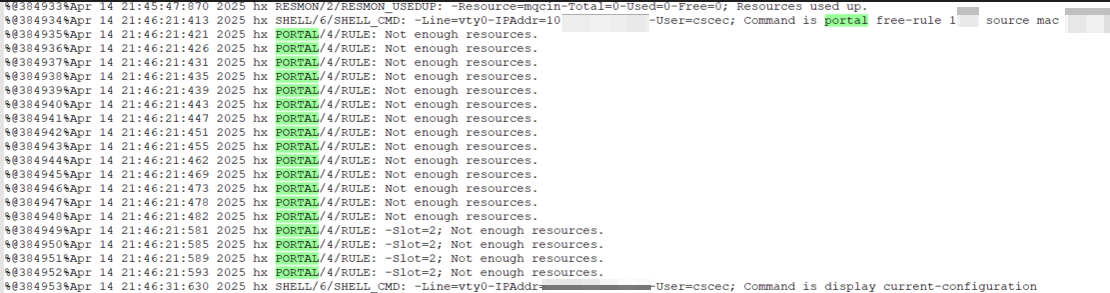
3. Suspect insufficient resources causing anomalies; further check resource usage:
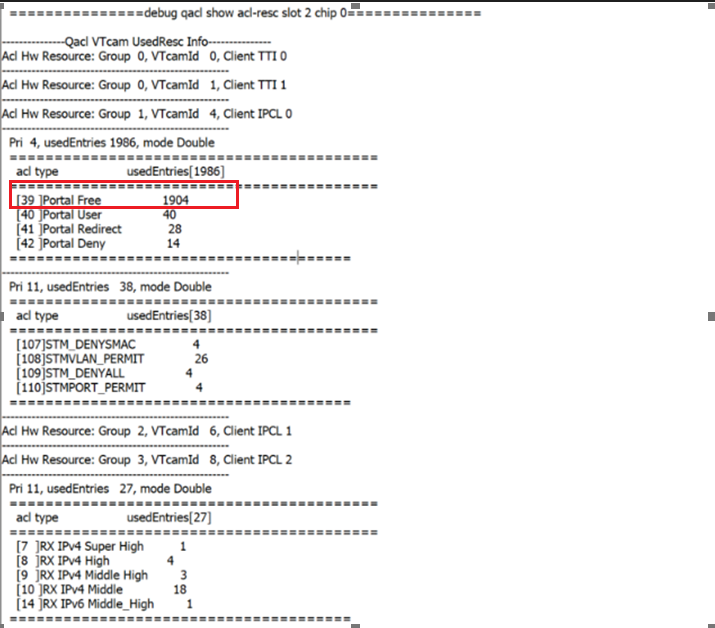
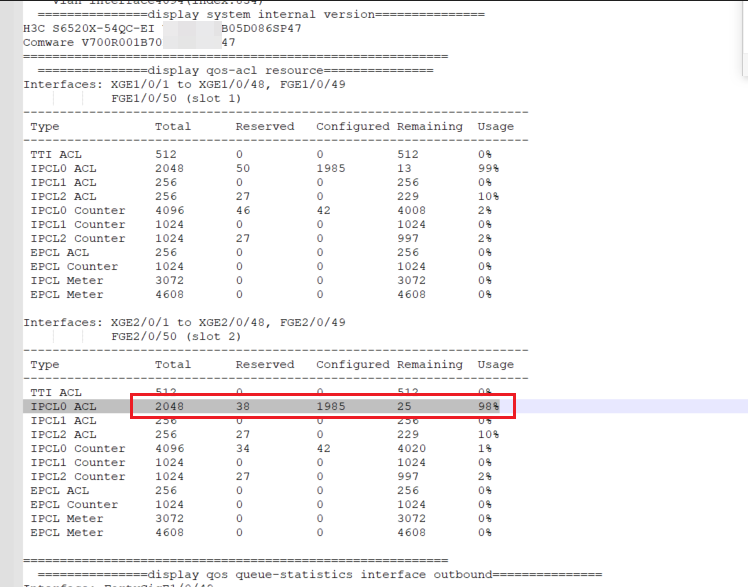
Currently, the inbound orientation resources are insufficient. Portal resources will be allocated to the underlying inbound orientation, occupying a total of 1986 resources. With only 2048 resources available, 98% have already been used. This will cause issues with the delivery of redirected packets at the underlying portal layer, and subsequent MQC or PBR configurations cannot be delivered.
This model can support 1K users (for specific specifications, please consult presales). As long as there are sufficient resources, hundreds of terminals will definitely not be a problem.
Solution
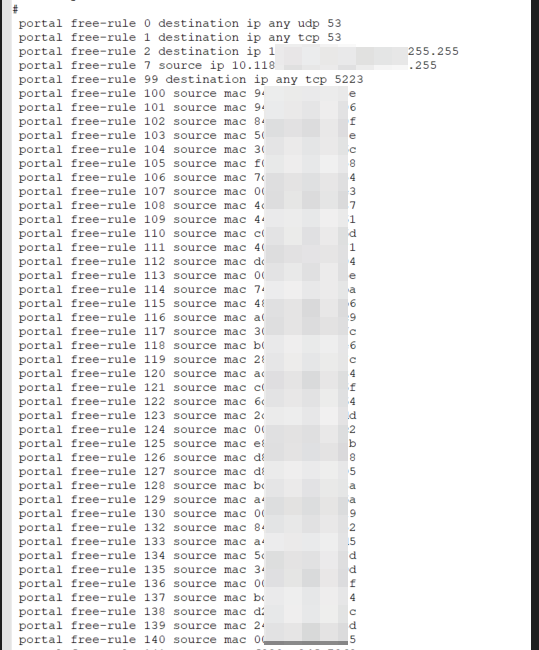
Each portal user is allocated four types of resources: Portal Free, Portal User, Portal Redirect, and Portal Deny. As shown in the screenshot, the underlying currently has the highest usage of Free, reaching up to 1904. This is caused by the configuration of the portal free-rule command. The other three types have relatively normal usage. Therefore, for optimization, the current focus is on reducing Free entries. Many free-rules were configured on-site, and after deleting some to release resources, the service returned to normal.